
- News
- World News
- US News
- ‘Over 50% voters probably don’t know there’s someone else running for President other than Trump, Biden’
Trending
This story is from August 22, 2020
‘Over 50% voters probably don’t know there’s someone else running for President other than Trump, Biden’
What has been the issue of ballot access in the US?
In the 18th and 19th centuries there were no government printed ballots.
Any voter was free to make his own ballot. Therefore the government back then had no means to keep anybody from running for office.
So when the people of the United States decided to form a new party- The Republican Party, in 1854, there was nothing stopping them. There was no need to worry about getting on the ballot because there was no ballot to get on. The ballots were made by each voter. And so there was freedom. But now every state in this country prints ballots and every state writes the rules on how a new party or an independent candidate can get on the ballot, and some of the states have written laws that make it extremely difficult for a new party to get on the ballot.
Would you say it is because of the federal structure of the US? Has it gone a bit too much in this regard?
There's plenty of countries in the world with federal structure. It doesn't follow logically that just because there's a federal structure there still shouldn't be a national rule on how people get on the ballot. There are federal laws in this country involving elections. So if Congress wanted to, Congress is free to write a national ballot access law for federal elections.
Why did you start Ballot access News?
In 1985, The first bill in the Congress on ballot access was introduced by Congressman (John) Conyers of Detroit, Michigan. And I started my newsletter because I knew lots of people who if they just knew about that bill would enthusiastically support it. So I started my newsletter mostly to tell people mostly about the progress of the bill, getting support for the bill.
What has been the key problem in getting this bill passed?
Well, the people in Congress except for Bernie Sanders and Justin Amash, are all Republicans and Democrats. You know they like it the way it is. Many of them would much prefer that there be no other parties on the ballot. So they aren't interested in helping solve this problem.
Has there been no legal challenge to this?
There's been many many cases in the US Supreme Court on ballot access. Some of them we have won and some lost.
It seems in the past every US Supreme Court justice had his own opinion about this issue; some of them were favorable and some of them were very unfavorable. President Kennedy's only appointment to the US Supreme Court was Byron White. I don't know why but Byron White fiercely resisted giving any ballot access help to minor parties and independent candidates. He wrote every one of the unfavorable decisions from 1972 until 1993 when he left the court.
The worst three states (for ballot access) are Florida, California and Texas, which just happen to be the three most populous states. California requires almost 200,000 and they have to be collected from the middle of April to early August. And it just happens that this year that period is entirely in the health crisis.
Which states have been relatively easier for the newer candidates/parties?
Vermont Legislature this year passed a bill saying anybody can get on the ballot this year only, with no petition at all and no filing fee. In Colorado and Louisiana and Oklahoma. You can get on for president with no petition if you pay a fee.
Is ballot access the main problem or is it just one of the problems for third parties?
It's probably the second biggest problem. The biggest problem for presidential elections is that there's this Commission on Presidential Debates which has a monopoly on all the presidential debates in the general election season and they will only invite candidates who are at least 15 percent in the polls.
In which polls?
Well that's the problem. They don't say. Furthermore when they make a decision, invariably they only invite the Democrats and Republicans and the Democrat and Republican have to promise they will not participate in any other general election debates. That's why I say the Commission on Presidential Debates has a monopoly.
This is not a statutory body right?
It's outside the law. It is a private group. However they get tax exempt donations from corporations. It costs a lot of money. And so we've had many lawsuits saying that in effect these corporations are contributing money to the Democratic and Republican candidates.
Indirectly that's true but the courts just will not do anything about it.
How big a problem is the presidential debate?
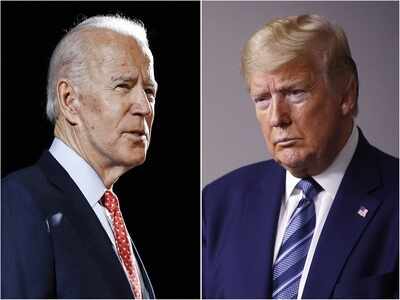
It's very very serious because probably over half the voters don't even know that there's anybody running for president other than Donald Trump and Joe Biden. If the leading minor parties could get into the debates, that would open the eyes of the whole country to see.that there are other candidates and to see what they stand for.
End of Article
FOLLOW US ON SOCIAL MEDIA








Photostories

Hot Picks
TOP TRENDING
Popular Categories
Hot on the Web
Top Trends
Israel Hezbollah WarMost Runs in International CricketVirat KohliIND vs BAN Live ScoreRohit SharmaIndian Team Fastest Test FiftyMohammed SirajUGC NET Result 2024TS DSC Results 2024Women T20 World Cup Points TableWomen T20 World Cup ScheduleShane McMahon Net WorthHezbollah ChiefTourists Not AllowedDiddyTop Management Colleges of IndiaLive Cricket Score
Trending Topics
Devara CollectionMithun ChakrabortyKangana RanautNavratri WishesGandhi Jayanti WishesAnant AmbaniDevara CollectionGandhi Jayanti 2024Masala OmeletteEmergencyDevaraTaaza Khabar 2 Twitter ReviewDevara Movie ReviewHealthy RaitasSwatantrya Veer SavarkarColdplay India tour 2025Smartphone DealsApple Macbook Air M1Amazon SaleWordle Answer
Living and entertainment
Latest News
iVoomi S1 Lite e-scooter launched at Rs 84,999: 180 km range, three-year warranty!Tata Nexon turbo CNG: Variant-wise features with price explainedPMI in India intensifies efforts against Illicit Tobacco Trade to Safeguard Economic Interests and Consumer ProtectionBarbra Streisand pays tribute to late 'A Star Is Born' co-star Kris Kristofferson: 'He was something special'Mumbai vs Rest Of India: Irani Cup tie offers chance for hopefuls and rejects to impress selectorsOlivia Culpo and Christian McCaffrey buy George Clooney's mansion for $14.5 millionKaun Banega Crorepati 16: Amitabh Bachchan believes he is 'Half-Sikh' recalling his maternal roots; reveals his aunts called him 'Amitabh Singh'RG Kar case: Kolkata court extends judicial custody of ex-principal, suspended cop till October 4When Dikembe's shoe size astonished the Mumbai Temple guardHow can Ben Stokes and other overseas players avoid a two-year IPL ban?"Nothing he was doing was believable", Darby Allin picks names wrestler who benefited most from AEW All In 2023 backstage incidentColleagues remember braveheart Delhi Police constable Sandeep: 'Would rush to crime scene alone'5 ways insecurity can ruin a relationshipBengaluru resident exposes fake Flipkart agent attempting to deliver bogus iPhone 15; read online reactionsBihar and Jharkhand among top two states enrolling for contributory pension scheme for farmers"Tyler Huntley’s 'Snoop' Nickname: The Rapper Connection Explained”BTS star V crowned 'Most Handsome Man in the World 2024'Decoding a bowl of Idli Sambhar: From calories to nutrients
Copyright © 2024 Bennett, Coleman & Co. Ltd. All rights reserved. For reprint rights: Times Syndication Service